Free Business Records Retention Planner

You have years of business records. The hard part is knowing what can be reviewed for disposal — and what still needs to stay.

A file can look old and still matter.

A tax rule may still apply. A contract or insurance requirement may require the record. An employee issue, audit, claim, dispute, investigation, or legal hold may have changed the answer completely.

And when records are spread across filing cabinets, email, cloud storage, accounting systems, and old folders, it becomes difficult to know why something is still being kept — or whether anyone has actually checked.

A disposal-review date is not permission to destroy the record.

The Business Records Retention Planner helps you inventory what the business keeps, document the retention practice you are following, record the basis for it, flag holds and open matters, review storage and sensitivity, and organize the questions that still need a qualified professional’s answer.

Free Excel planner. No account required. Anything you download is yours to keep.

Use the planner for record categories, dates, storage locations, and review questions — not copies of sensitive records.

Created by Josh Keller, CFO and business owner, for owner-led businesses.

A common situationThe file looks old enough to delete. But there is still an open dispute.

Here's a situation the planner is designed for.

RecordContract and supporting project records
Open matterPayment dispute
Normal disposal timingUnder review
Disposal decisionNot available while the matter remains open
Next stepKeep the record under review until the matter is resolved and the applicable retention requirement has been confirmed

The planner can help you see why the record should not move forward yet.

It does not decide when the record can legally be destroyed.

An open dispute, legal hold, audit, claim, investigation, or similar matter can change what would otherwise look like ordinary disposal timing.

Fictional illustrative example.

When this helps

Useful when nobody can confidently answer, “Why are we still keeping this?”

You have boxes, folders, and digital files that have been around for years

You know some need to stay. You suspect some probably do not. But there is no single place showing what has actually been reviewed and why.

Use the planner to record the current practice, supporting basis, triggering event, and whether anyone has verified it.

Important records live in several different places

Some are paper. Some are in accounting software. Others are in email, cloud drives, employee systems, or somebody’s old folder structure.

Document the format, storage location, backup, sensitivity, access review, and who owns the record category.

Somebody wants to clean out the old files

Age alone does not answer whether a record should be destroyed.

Use the retention basis, hold checks, open-matter review, and disposal-review section before anything moves forward.

Something changed after the normal retention process was set

An audit, claim, employee complaint, payment dispute, investigation, lawsuit, financing review, or other matter may mean the ordinary schedule should no longer control the affected records.

Put the matter and the affected record into one review instead of relying on somebody to remember the exception.

What you get

You do not have to build the first records inventory from scratch.

The planner starts with 22 common business-record categories so you have a practical place to begin rather than staring at an empty spreadsheet.

Those starter categories cover areas such as formation and ownership, taxes, accounting, payroll, employees, contracts, customer and vendor agreements, invoices, job records, property and equipment, insurance, cybersecurity and privacy, regulated information, disputes and legal holds, marketing consent, and company policies.

There is room for up to 40 total record rows, so you can add categories specific to your own business.

Each applicable record can capture things such as:

  • who owns it
  • whether it is paper, digital, or both
  • where it is stored
  • whether a backup exists
  • how sensitive it is
  • the current retention structure
  • what event starts the retention period
  • the supporting basis
  • whether that basis has been verified
  • hold checks and open matters
  • the disposal method
  • review dates and lifecycle status
15 hold or disposal-review matters
12 professional questions
12 follow-up actions

What it does — and doesn't do

The planner helps you document and review a retention decision. It does not establish the legally correct retention period or authorize destruction.

Get the free plannerFree Excel download. No account required. Join the Monthly Owner Guide to receive this workbook.

Before you put information in the file

Inventory the records. Don't put the records themselves into the planner.

The workbook is meant to contain metadata, short descriptions, dates, locations, and review notes — not copies of the underlying documents.

Do not paste or attach passwords, credentials, banking details, medical records, employee files, customer files, legal communications, confidential source documents, or other sensitive records.

Use short descriptions and document-location references instead.

See what's inside

Start with the records the business is actually keeping today.

The file has five sheets.

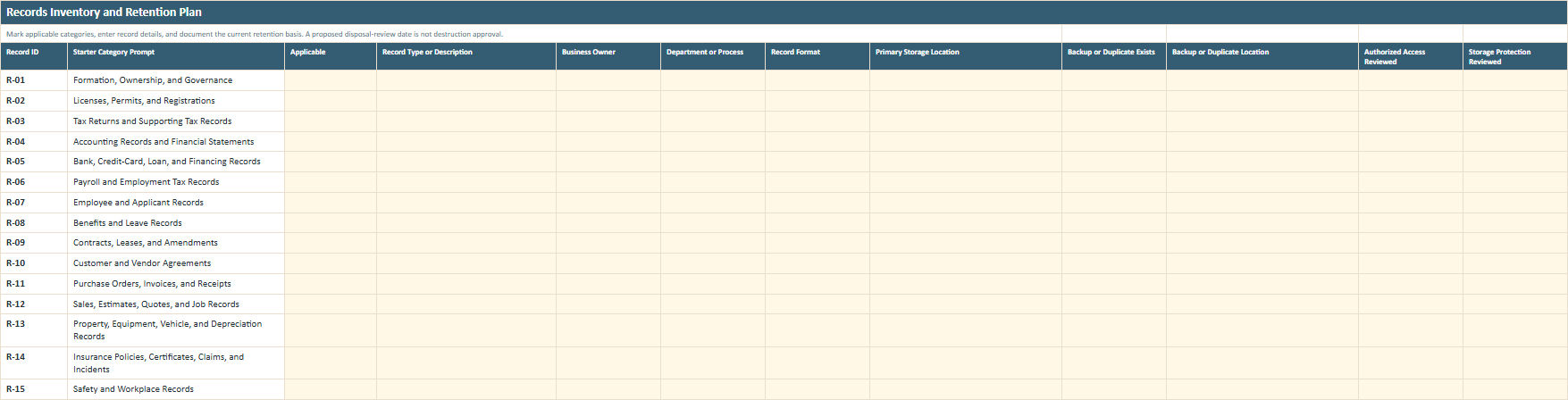
Records Inventory and Retention Plan worksheet preview from the Owner Advisor Business Records Retention Planner
Records Inventory and Retention Plan

See what the business keeps, why it is being kept, where it lives, and what still needs review.

Work through the starter categories and add business-specific records. Record the current retention approach, supporting basis, storage, sensitivity, hold status, and review dates in one place.

The Excel tab itself uses the shorter name Records Inventory & Plan because of Excel’s worksheet-name limit.

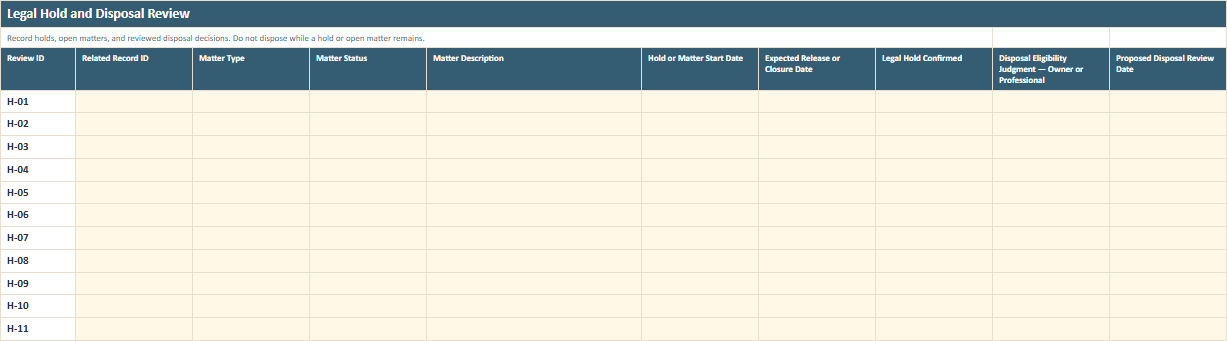
Legal Hold and Disposal Review worksheet preview from the Owner Advisor Business Records Retention Planner
Legal Hold and Disposal ReviewKeep a record from moving toward disposal while something important is still open.

Track audits, claims, disputes, investigations, litigation, legal holds, and disposal reviews alongside the affected record, matter status, reviewer, proposed review timing, decision status, evidence, and next review date. This is where “old enough to review” stays separate from “approved to destroy.”

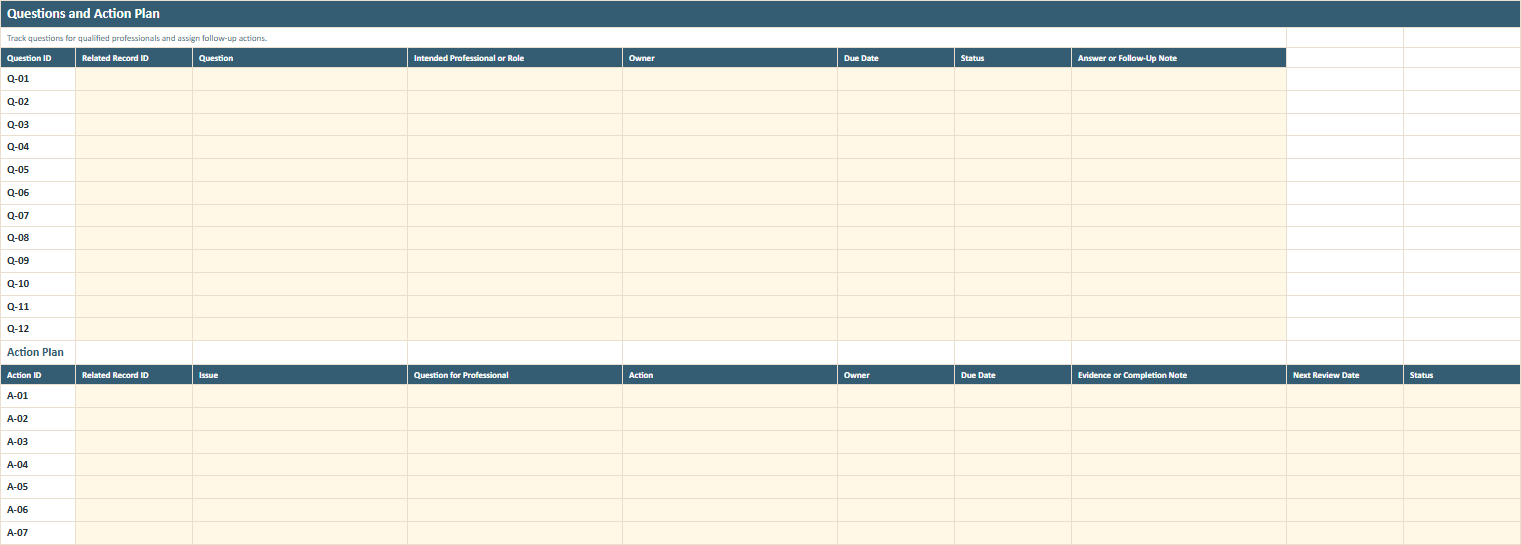
Questions and Action Plan worksheet preview from the Owner Advisor Business Records Retention Planner
Questions and Action PlanTurn “I'm not sure” into a question somebody actually owns.

Track questions for an attorney, accountant, tax adviser, human-resources adviser, insurer, lender, regulator, or another qualified specialist. Then record the follow-up action, owner, due date, evidence, status, and next review date so the answer does not disappear into an email thread.

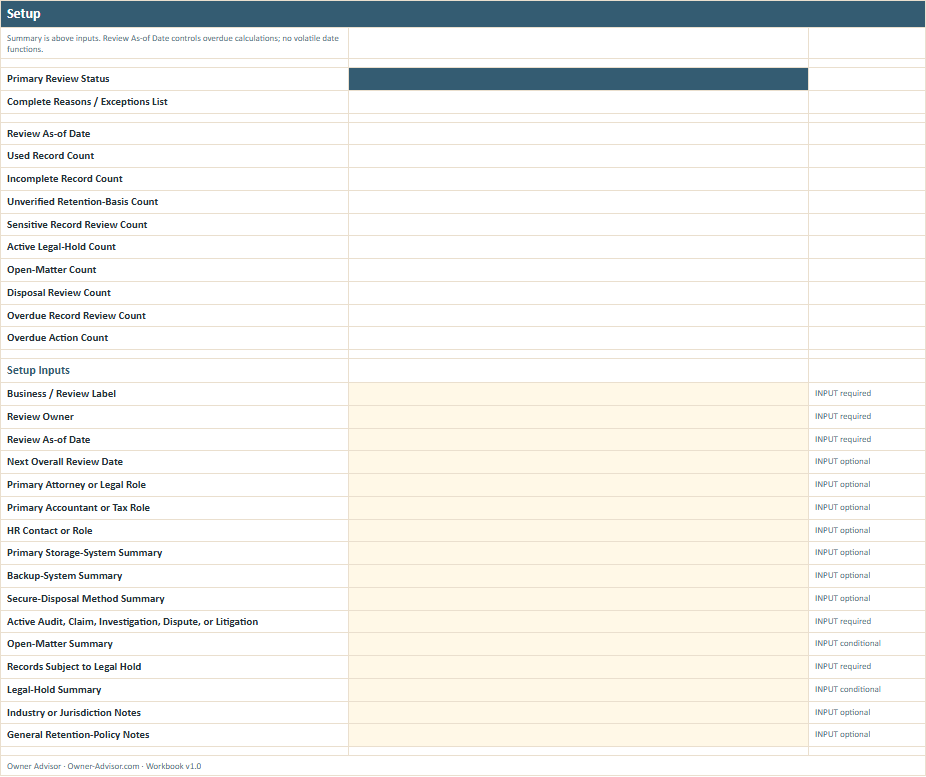
Setup worksheet preview from the Owner Advisor Business Records Retention Planner
SetupGive the records review an owner, a date, and enough context to make the rest of the workbook useful.

Record who owns the review, the review date, the next planned review, primary and backup storage, current disposal method, professional contacts, active matters, legal holds, and any industry or company-policy notes.

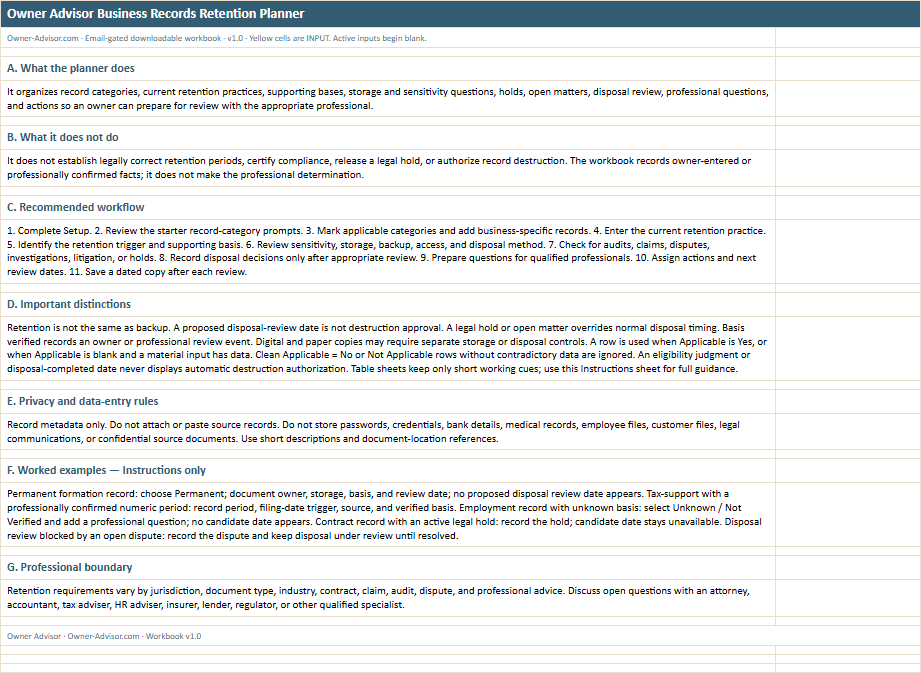
Instructions worksheet preview from the Owner Advisor Business Records Retention Planner
InstructionsKnow what the workbook can organize — and which answers it cannot provide for you.

The instructions walk through the review process, explain the difference between retention and backup, show how holds and open matters affect disposal review, provide worked examples, and define where professional judgment is still required.

All names, amounts, dates, businesses, and scenarios shown in the previews are illustrative.

Start with the records you already have

You do not need a finished company retention policy to build the first useful inventory.

The goal is not to make it easier to delete records. It is to make it harder to delete the wrong ones.

  1. 1

    Review the starter categories.
    Mark which record types apply and add anything important that is unique to the business.

  2. 2

    Record what you currently do.
    Document where the records are stored, who owns them, how long you currently keep them, and what event starts the retention period.

  3. 3

    Identify what still needs verification.
    Record the supporting basis, source, hold checks, open matters, storage questions, and anything that still needs a qualified professional’s answer.

  4. 4

    Review before anything is destroyed.
    Use the legal-hold and disposal-review section, resolve unanswered questions, and document the decision and follow-up.

Once the first inventory is built, you have something concrete to review instead of another pile of files and unanswered questions.

Planner details

Built to be useful without turning the decision into a bigger project.

FormatExcel .xlsx
SheetsInstructions, setup, records inventory and retention plan, legal hold and disposal review, and questions and action plan worksheets
UpdatedAugust 2026
Created byJosh Keller, CFO

Related Business Guide

Before you decide what can go, understand what may require you to keep it.

The Owner Advisor guide What Business Records Should I Keep, and How Long Should I Keep Them? explains the main questions that can affect retention, including federal tax and payroll baselines, common business practices, legal holds, contracts, insurance, continuing business value, and when routine destruction should stop. Use the guide when you want to understand what can affect a retention period. Then use the planner to document how those questions apply to the records your business actually has.

Common questions

Does the planner tell me exactly how long every business record must be kept?

No. Retention requirements can vary by jurisdiction, record type, industry, contract, insurance requirement, audit, claim, dispute, legal hold, and other circumstances. The planner helps you record a retention period and its supporting basis. It does not establish that the period is legally correct.

Does the planner contain common record categories already?

Yes. It starts with 22 common categories and provides room for up to 40 total record rows so you can add records specific to your business.

Can it calculate a date when a record should be reviewed for disposal?

For some records, yes. When the necessary retention information and triggering date are entered, the basis has been verified, and the required hold checks are clear, the workbook can calculate a proposed disposal-review date. That date is not destruction approval.

What happens if there is a legal hold, audit, claim, dispute, or investigation?

The planner is designed to surface those matters before disposal. A legal hold or open matter can stop normal disposal timing and keep the affected records under review until the matter is properly resolved.

Can I track where records are stored?

Yes. You can record paper, digital, or mixed formats; primary storage; backups; backup locations; access review; storage protection; sensitivity; and disposal method.

Should I paste confidential records into the workbook?

No. Record metadata, short descriptions, and document-location references. Do not put confidential source records, credentials, banking information, medical information, employee files, customer files, or legal communications into the planner.

Does “Ready for Professional Review” mean my retention policy is compliant?

No. It means the workbook has been organized for the next professional review. It is not a compliance certification and does not establish that every retention or disposal decision is correct.

Who should I ask when I do not know the right retention requirement?

The planner gives you a place to track questions for your attorney, accountant, tax adviser, human-resources adviser, insurer, lender, regulator, or another qualified specialist. Start by recording the unanswered question and the professional best suited to help resolve it.

Put the records, retention questions, and open holds into one reviewable plan.

Organizes retention, hold, and disposal questions for professional review; does not establish legal obligations, release holds, or authorize destruction.

Know what records the business is keeping.

Know where they are stored.

Know what retention basis you are relying on.

Know what still needs review before anything is destroyed.

Enter your email and we'll send you the planner. Anything you download is yours to keep.

Use it to organize the questions before a retention or disposal decision is made.